
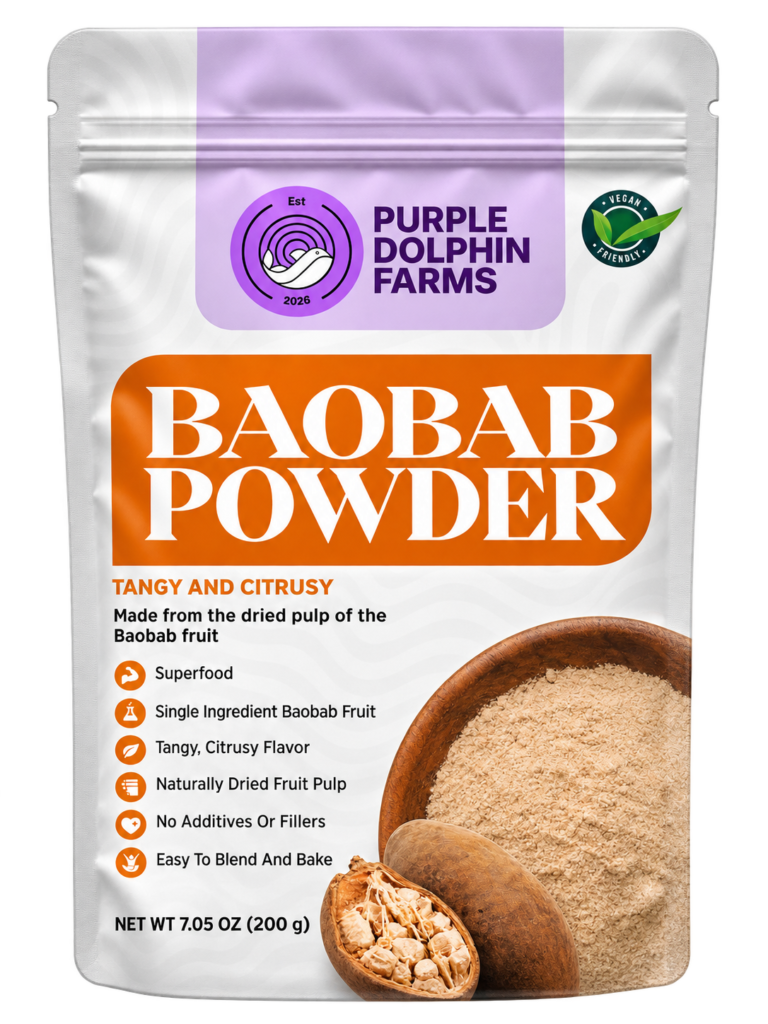
Baobab Powder
Baobab powder comes from the fruit of the baobab tree, a distinctive tree native to Africa and also found in Australia. The fruit has a naturally tangy, citrus-like flavour and is valued for its nutritional content. Baobab powder is particularly rich in dietary fiber and provides vitamin C, along with minerals such as potassium and calcium. Its refreshing, slightly tart taste makes it a versatile addition to everyday meals. Stir it into water or juice, blend it into smoothies, or mix it into yoghurt, and homemade recipes for a simple way to add more fiber and nutrients to your diet.
- Rich in vitamin C and polyphenols
- Supports immune function
- Reduces oxidative stress
- Promotes cellular regeneration
- Anti-inflammatory properties
Mechanism of Action
Baobab fruit pulp delivers one of the highest ORAC (Oxygen Radical Absorbance Capacity) values of any fruit. Its vitamin C content — 6x that of oranges — drives collagen synthesis and supports immune cell function. The polyphenol matrix modulates NF-kB inflammatory signaling while promoting cellular repair through autophagy activation.
Learn More About Baobab Powder
What is baobab?
Baobab is the fruit of the Adansonia digitata tree, one of Africa’s most recognisable trees. It grows across many parts of sub-Saharan Africa and produces large, oval fruits with a hard outer shell and naturally dry, powdery pulp inside. Unlike many fruits, baobab pulp dries naturally while still inside the fruit. The pulp is collected and processed into the fine powder used in food and drinks.
Baobab has a distinctive tangy, citrus-like flavour. It is particularly valued for its dietary fibre and vitamin C content, and also provides potassium, calcium, magnesium and plant compounds called polyphenols. Its combination of fiber and naturally occurring plant compounds makes it an interesting addition to a balanced diet.
What does baobab do in the body?
- Digestive health: Its dietary fiber contributes to normal digestion and bowel regularity. Some of its fibres may also be fermented by beneficial gut bacteria.
- Gut microbiome: Laboratory research suggests that certain baobab fibers may have prebiotic potential, meaning they could help nourish beneficial gut microorganisms. Human evidence is still limited.
- Immune function: Vitamin C contributes to normal immune function and helps protect cells against oxidative stress.
- Blood sugar response: Small human studies have found that baobab fruit preparations may reduce the rise in blood glucose after consuming carbohydrates. This is promising, but it does not establish baobab as a treatment for diabetes.
- Iron absorption: Vitamin C helps the body absorb non-haem iron, the type of iron found in plant foods.
- Antioxidant support: Baobab contains polyphenols and vitamin C, which contribute to the body’s antioxidant defence systems.
Health conditions and concerns being researched
Baobab has been studied or traditionally used in connection with:
- Constipation and digestive discomfort.
- Blood sugar regulation and type 2 diabetes.
- Gut microbiome balance.
- Oxidative stress.
- Iron deficiency and nutritional insufficiency.
- Immune function.
However, there is not enough human clinical evidence to say baobab prevents or treats these conditions. In particular, its proposed effects on gut bacteria and diabetes need more research.
Who might find it useful?
People looking to increase their dietary fiber intake, add more vitamin C-containing foods to their diet, or introduce a tangy, nutrient-rich ingredient into their meals.
Things to be mindful of
- Start with a small serving if you are not used to high-fibre foods. Increasing fibre too quickly may cause bloating or gas.
- Drink enough water when increasing fiber intake.
- People taking medication to manage blood sugar should not use baobab as a replacement for treatment.
- Check the product label for serving recommendations and ingredients.
Ways to enjoy it: Mix into water, smoothies, yoghurt, oatmeal, juices, salad dressings and homemade snacks.
Fiber, vitamin C, potassium, calcium and polyphenols.