
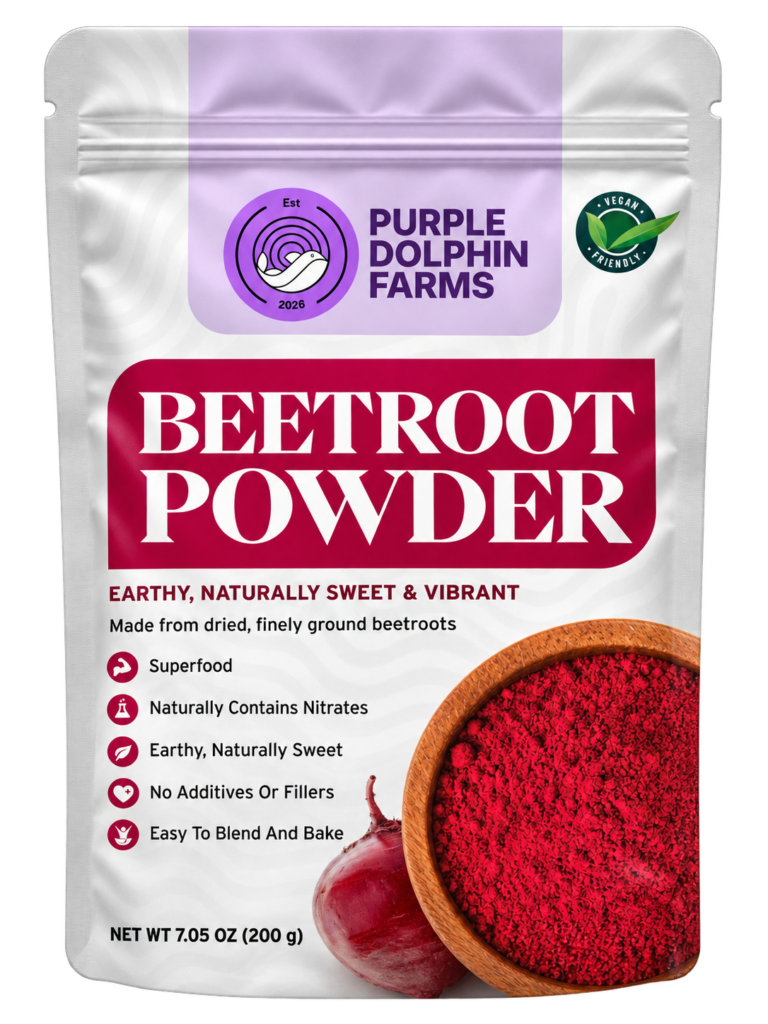
Beet Powder
Beet powder is made from beetroot, the deep red or purple root vegetable known for its naturally earthy, slightly sweet flavour. Beets provide nutrients such as folate and potassium, as well as betalains, the plant pigments responsible for their distinctive colour. They are also a natural source of dietary nitrates, which the body can convert into nitric oxide, a compound that helps support healthy blood vessel function and circulation. Beet powder makes it easy to enjoy beetroot without peeling, chopping or cooking the fresh vegetable. Blend it into smoothies and juices, stir it into yoghurt or add it to recipes for a colourful nutritional boost. It can also be incorporated into an active lifestyle as part of a balanced diet.
- Nitric oxide production
- Improved blood flow and circulation
- Mitochondrial efficiency
- Betalain antioxidant protection
- Exercise performance support
Mechanism of Action
Dietary nitrates in beetroot convert to nitric oxide (NO) in the body, a signaling molecule that dilates blood vessels, improves oxygen delivery, and enhances mitochondrial efficiency. Betalains — the pigments responsible for beet’s deep color — provide potent anti-inflammatory and antioxidant effects distinct from other antioxidant classes.
Learn More About Beet Powder
What is beetroot?
also known simply as beet, is the edible root of the Beta vulgaris plant. It is recognised by its deep red-purple colour, earthy flavour and natural sweetness. Although it is grown in many parts of the world, beetroot has been cultivated and eaten for centuries across Europe, the Mediterranean and other temperate regions.
Beetroot powder is made by drying and grinding the root into a concentrated-looking powder. It naturally contains dietary nitrates, betalains (the pigments responsible for its rich colour), folate, potassium and other nutrients.
One of the most interesting things about beetroot is its naturally occurring nitrate content. When consumed, dietary nitrate can be converted by the body into nitric oxide, a molecule that helps blood vessels relax and widen.
What does beetroot do in the body?
- Circulation and blood flow: Nitric oxide helps blood vessels relax, supporting healthy circulation.
- Blood pressure: Some clinical trials have found that beetroot juice can modestly lower systolic blood pressure in people with hypertension. However, the evidence is not strong enough to replace prescribed medication.
- Exercise performance: Dietary nitrates may improve the efficiency with which muscles use oxygen during physical activity, potentially helping with endurance and exercise tolerance.
- Stamina and physical activity: Some studies suggest beetroot juice may help recreational athletes exercise for longer or improve performance in endurance activities.
- Antioxidant support: Beetroot contains betalains and other plant compounds with antioxidant activity.
- Nutritional support: It provides folate, which contributes to normal cell division and red blood cell formation, as well as potassium, which supports normal muscle and nerve function.
Health conditions and concerns being researched
Beetroot and its nitrate content have been studied in relation to:
- High blood pressure.
- Cardiovascular health.
- Reduced blood flow and vascular function.
- Exercise fatigue and endurance.
- Physical performance and recovery.
- Oxidative stress.
The strongest areas of interest are blood vessel function, blood pressure and exercise performance. Research does not establish beetroot powder as a treatment for hypertension or cardiovascular disease. Also, the nitrate content of powders varies, so findings from standardised beetroot juice studies cannot automatically be applied to every powder.
Who might find it useful?
People interested in supporting cardiovascular wellness, maintaining an active lifestyle, or adding a naturally colourful vegetable ingredient to their daily nutrition.
Things to be mindful of
- Beetroot can turn urine or stools pink or reddish. This is usually harmless and is caused by natural pigments.
- Beets contain oxalates, so people with a history of calcium oxalate kidney stones may need to moderate their intake.
- Because dietary nitrates can influence blood pressure, people taking blood-pressure medication or nitrate-based medication should seek medical advice before using concentrated beetroot products regularly.
- Large amounts may cause digestive discomfort.
- Beetroot powder is not a substitute for prescribed treatment for high blood pressure.
Ways to enjoy it: Mix into water, smoothies, juices, yoghurt, pancakes, energy balls and homemade sauces.
Dietary nitrates, betalains, folate, potassium and plant antioxidants.